Workshop on
advanced NUmerical MEthods for Real-world Applications (NUMERA)
June 15, 2026 - Department of Mathematics
University of Bari Aldo Moro
About NUMERA Workshop
NUMERA (Advanced NUmerical MEthods for Real-world Applications) is a workshop focused on recent advances in numerical methods and scientific machine learning for complex real-world problems. The event emphasizes the integration of model-based numerical approaches with data-driven techniques, a rapidly growing frontier in scientific computing.
The workshop aims to present novel methodologies that enhance computational efficiency, predictive accuracy, and scalability for high-dimensional and interdisciplinary applications. Key topics include model order reduction, physics-informed neural networks, scientific machine learning, multiscale and hybrid modeling, and advanced numerical methods for large-scale and high-dimensional problems.
Important Dates
Registration opening and abstract submission (Poster session): March 15, 2026
Abstract submission deadline: April 15, 2026 April 30,
2026
Author notification: May 1, 2026 May 5, 2026
Registration deadline: May 31, 2026
Keynote Speakers

Learning pattern formation in reaction-diffusion systems
Reaction-diffusion systems provide a powerful framework for describing pattern formation
phenomena arising in biology, chemistry, and materials science. In this talk, we present
recent advances in data-driven and machine-learning-based methodologies for the analysis and
reduction of nonlinear reaction–diffusion models exhibiting diffusion-driven instabilities
and Turing patterns.
We present an efficient data-driven regression approach for constructing reduced-order
models (ROMs) of reaction–diffusion systems from high-fidelity simulation data. The ROMs are
learned non-intrusively through polynomial reduced models, without requiring explicit
knowledge of the underlying governing equations or numerical solvers. The learning procedure
is formulated as a low-cost least-squares problem in a reduced-order subspace identified via
Proper Orthogonal Decomposition (POD). Numerical experiments on classical benchmark systems,
including the Schnakenberg and Mimura–Tsujikawa models, demonstrate that higher-order
surrogate models significantly improve predictive accuracy while maintaining low
computational cost. The proposed framework provides a flexible and efficient approach for
the analysis of complex spatio-temporal dynamics.
We then address the inverse problem of recovering model parameters associated with
prescribed Turing morphologies using Physics-Informed Neural Networks (PINNs). Starting from
sparse experimental or synthetic observations, the proposed PINN-based methodology
accurately reconstructs both the spatial structures and the corresponding model parameters
across several classes of patterns.

Microscopic and macroscopic mathematical models for vehicular and pedestrian traffic
In this talk we present some recent advances in vehicular and pedestrian traffic modelling. We first consider a pedestrian model characterized by the fact that the maximal crowd density - typically a fixed parameter in the models - is instead variable in space and time, and its dynamics is governed by a dedicated equation. We also consider a vehicular traffic model on a road network with vehicle-to-vehicle communications and rational decision-making.
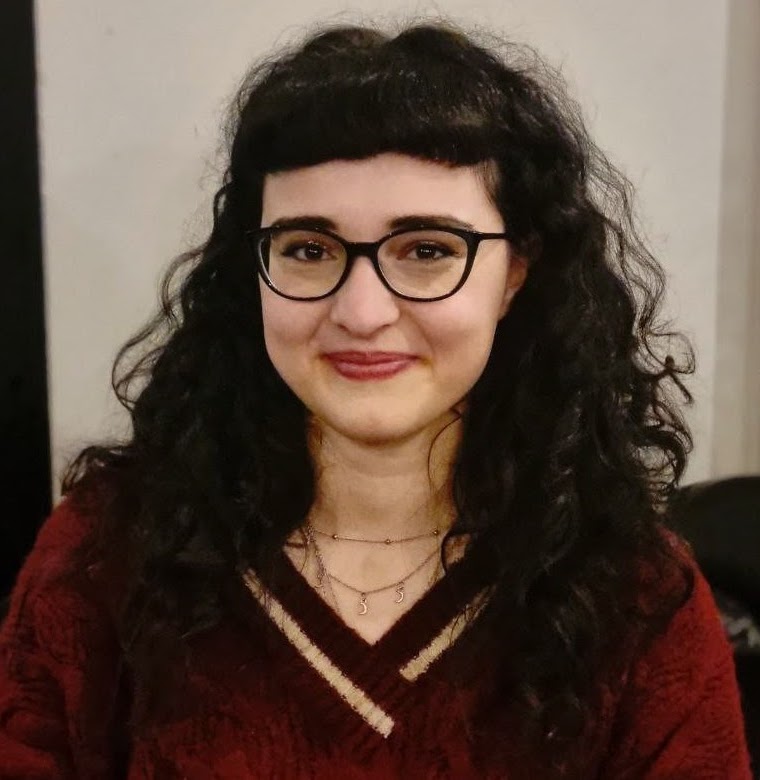
Invited Speakers





Workshop Program
Date: June 15, 2026
Time: 09:00 - 17:30
Location: University of Bari Aldo Moro, Dept. of Mathematics, Aula VIII
| 09:00 - 09:30 - Registration | |
| 09:30 - 09:45 |
Welcome and opening remarks Organizers |
| 09:45 - 10:30 |
Learning pattern formation in reaction–diffusion systems Alessandro Alla |
| 10:30 - 11:00 |
Interpretable latent dynamics via graph
convolutional networks Federico Pichi |
| 11:00 - 11:45 - Coffee break & Poster Session | |
| 11:45 - 12:15 |
Discontinuous Galerkin methods for
multiphysics models of neurodegeneration Mattia Corti |
| 12:15 - 12:45 |
BINNO: A First-Order Framework for Nonconvex
and Nonsmooth Bilevel Optimization with Applications to Matrix Factorization Flavia Esposito |
| 13:00 - 14:15 - Lunch & Poster Session | |
| 14:15 - 15:00 |
Microscopic and macroscopic mathematical models for vehicular and pedestrian traffic Emiliano Cristiani |
| 15:00 - 15:30 |
A Kinetic Control Framework for Opinion
Evolution in Adaptive Networks Matteo Piu |
| 15:30 - 16:00 |
Relaxation Schemes for Flows in Networks:
Application to Shallow Water and Blood Flow Equations Tommaso Tenna |
| 16:00 - 16:30 - Coffee break & Poster Session | |
| 16:30 - 17:00 |
An Objective-Function-Free Trust Region
Framework for Decentralized Optimization Greta Malaspina |
| 17:00 - 17:30 |
T-ARC: Topology-Aware Randomized Clustering
via Distributionally Robust Optimization Serena Grazia De Benedictis |
| 17:30 - Closing | |
Poster Session
- On the localization of the multinode Shepard method - Francesco Dell’Accio
- Sample Size Recalculation in Clinical Trials: A Comparative Analysis of Variance Estimation Methods - Marika Mansueto
- Overcoming the Limitations of Latent Gaussian Models: A Systematic Review of INLA-based Hybrid Machine Learning - Maria Grazia Manco
- Augmented Data Prediction in Physics-Informed Neural Networks Using a Predictor–Corrector Framework - Mariateresa Bruni
- Polynomial Approximation of Caputo Fractional Derivatives via a Constrained Mock-Chebyshev Least Squares Method - Francesco Larosa
- The univariate multinode Shepard method for the Caputo fractional derivatives: from Approximation to the solution of Bagley-Torvik equation - Filomena Di Tommaso
- Numerical techniques for multispectral image demosaicing - Flavia Fazio
- Geospatial Foundations Models with Low Rank Adaptation - Davide Rizzi
- Multi-hazard Resilience Assessment of Road Networks: The Case Study of the Municipality of Messina - Niloofar Kheirkhahan
- Automated Framework for 4D Bi-Atrial Surface Reconstruction from Routine Cine CMR Acquisitions - Emanuele C. Amato
- West Nile Virus in Puglia: One Health Insights from Mosquito Surveillance, Animal Reservoirs, and Predictive Risk Mapping - Niccolò Maldera
- Multi-Objective Optimization for Physics-Informed Neural Network and applications - Liliana Lafiosca
- A Multimodal Computational Framework for Robust Similarity-based Drug Repurposing - Samantha Bove
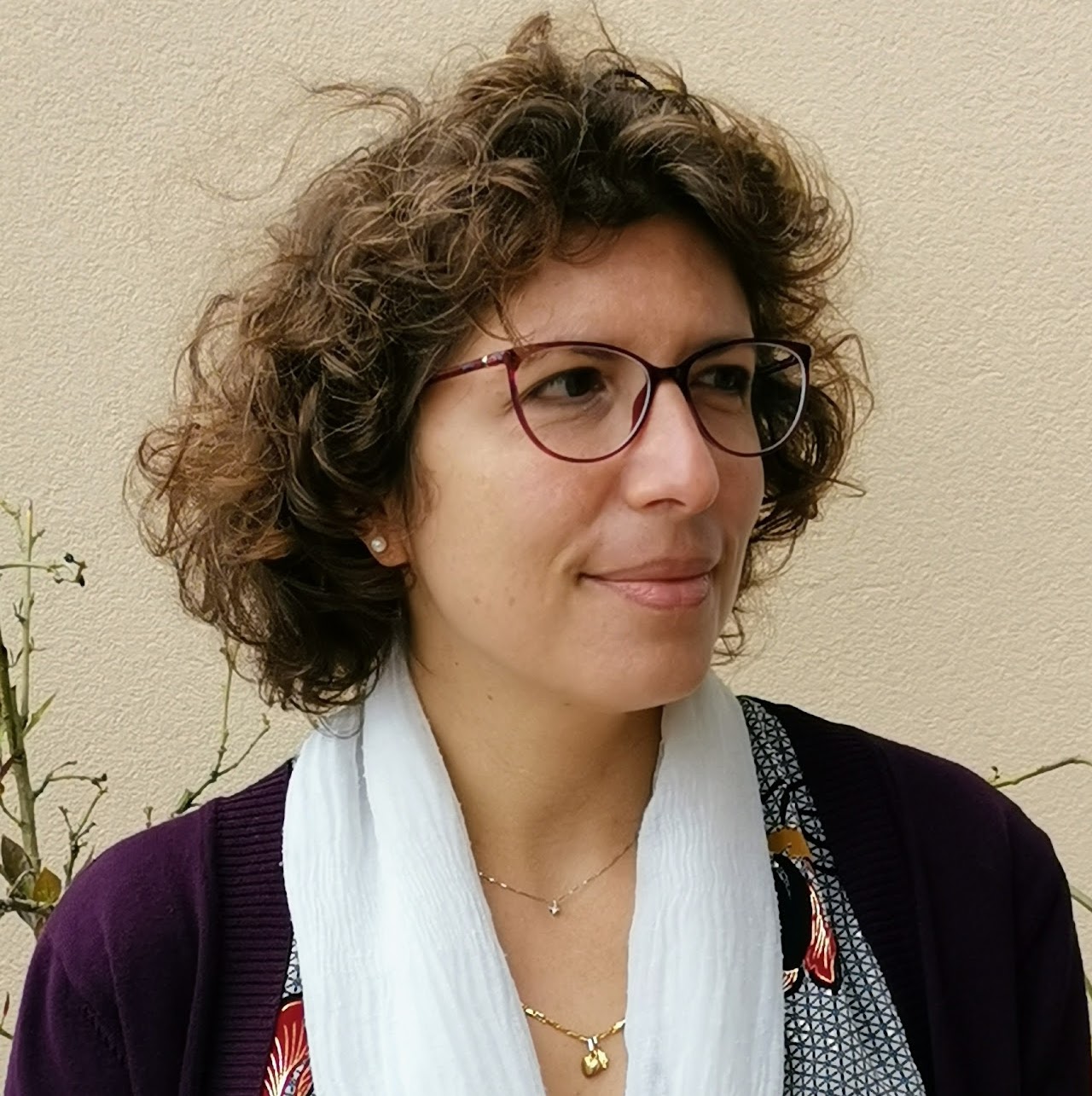
Organizing Committee



Registration
Registration is free of charge (but mandatory) for all participants.
During the registration you can also submit an abstract for Poster Presentation, that will be evaluated by the Scientific Committee. Abstracts must not exceed one page, using the LaTeX template available here.
Please note: Registration will be completed through a Google Form. You will be required to upload your abstract file (PDF format) during the registration process.
To register, please fill out the Google Form registration.
Venue
The workshop venue will be in the Department of Mathematics, located in the Campus Ernesto Quagliarello, Via E. Orabona, 4, Bari, Italy
Please read about the venue in the Dept. of Mathematics webpage.
Supported by: